Customer Success
How to Build and Manage a Customer Success Team: 7 Steps
Amir ReiterApril 18, 2024

Creating a solid customer success team is as important as having a skilled marketing and sales team.
The primary duty of a customer success team is to ensure customer retention by providing valuable resources and dependable support.
Have you ever been introduced to a product by a customer success rep who answered all your questions and encouraged you to continue your monthly subscriptions over the phone?
If yes, then you have first-hand experience of the impact of a customer success team.
However, if most of your customers leave after some time, it may be a sign that you need to build the right customer success team.
In this blog post, we will explore the definition of a customer success team and provide seven steps for building a high-performance team.
1. Understand the Role and Responsibilities of a Customer Success Team
Customer success involves proactively assisting customers in reaching their desired outcomes while using your products or services.
The customer success department anticipates potential problems and challenges that customers may face and offers appropriate solutions to enhance their experience.
A well-defined customer success strategy can help your business increase customer satisfaction and retention.
Additionally, employees can be trained to upsell and cross-sell to customers to boost revenue.
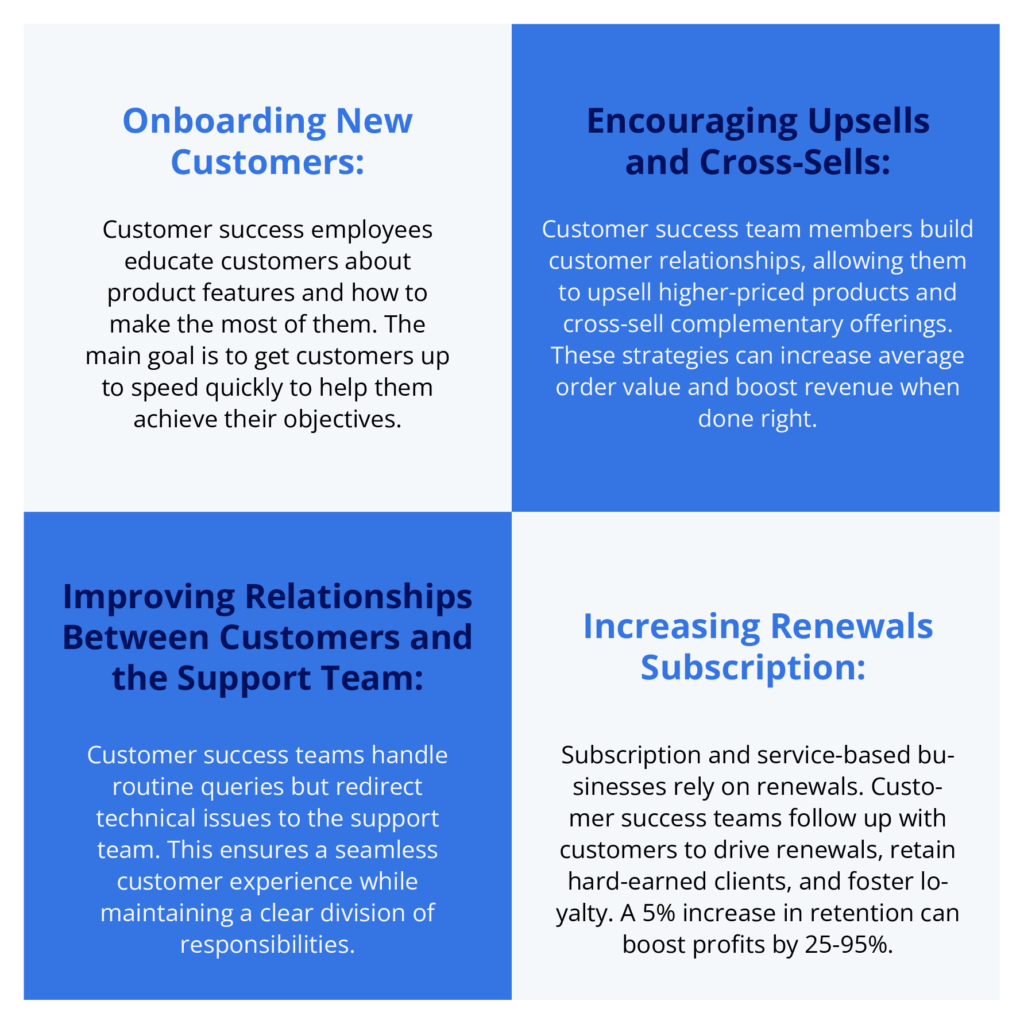
Here are the key responsibilities of a customer success team:
2. Establish the Three Pillars of a High-Performing Customer Success Team
Establishing a high-performing customer success team that drives customer loyalty and business growth requires focusing on three essential pillars: Impact, Engagement, and Experience.
These pillars are a solid foundation for a team that can effectively solve customers’ problems, keep them engaged, and provide delightful experiences at every touchpoint.
By creating a customer success team that excels in these areas, a business can gain a strategic asset that sets it apart from competitors and contributes to its overall success.
1. Impact
Your products or services significantly impact your customers’ lives, regardless of your industry.
Effective communication is crucial for customer success teams to showcase how your offerings can positively impact your customers.
To demonstrate the value your company brings to its customers, you must highlight the concrete benefits and solutions provided by your products or services.
By focusing on your company’s impact, your team can build stronger relationships and increase overall customer satisfaction.
2. Engagement
Customers value businesses that maintain relationships even after a sale has been made.
A customer success team prioritizes engaging and educating customers through various channels. By consistently interacting with your customers, you keep your business at the forefront of their minds, which increases the probability of repeat purchases and long-term loyalty.
Share high-quality content, updates, and individualized recommendations frequently to nurture these relationships and demonstrate your unwavering commitment to their success.
3. Experience
Every customer interaction is a chance to differentiate your business through a positive and memorable experience, from the onboarding process to after-sales support.
Studies indicate that companies prioritizing customer experience generate 4-8% more revenue than their competitors.
By understanding your customers’ needs, preferences, and pain points, you can create personalized experiences that exceed their expectations.
3. Determine the Right Time to Build Your Customer Success Team
Timing is crucial when it comes to building a customer success team. Unlike other departments such as sales, accounts, or marketing, customer success is often introduced at later stages of business operations.
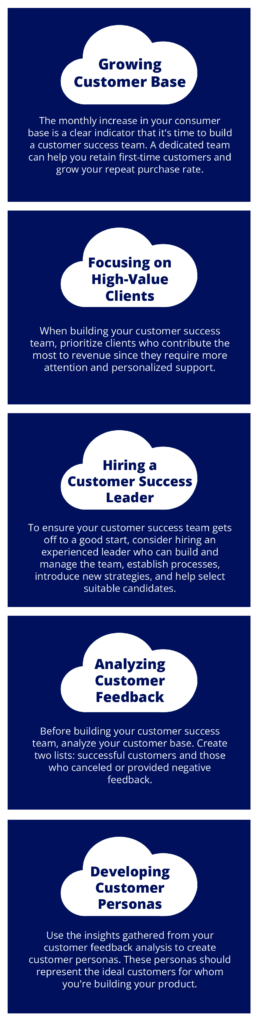
If you’re wondering whether it’s the right time to invest in a strong customer success team, consider the following factors:
4. Hire the Right Talent for Your Customer Success Team
Building a strong and effective customer success team depends on hiring the right people.
Although finding the perfect fit for your company can be challenging, many talented customer success professionals who could be your next best hire are available.
Identifying Essential Skills and Traits
When evaluating potential candidates, look for the following essential skills and traits:
- People Skills: Customer success team members must have exceptional interpersonal skills since they interact daily with customers. They should build rapport, communicate effectively, and handle difficult situations empathetically and patiently.
- Organizational Skills: Customer success professionals must be highly organized to manage multiple accounts, prioritize tasks, and meet deadlines while maintaining accurate customer interactions and progress records.
- Specific Soft Skills: When hiring for a position, identify the necessary soft skills. For example, customer success managers should possess leadership, problem-solving, patience, and practical communication skills.
- Work Ethics: Ensure your candidates understand and embody strong work ethics, such as integrity, reliability, and a commitment to excellence.
Determining the Appropriate Team Size
It’s essential to have a clear structure in mind before starting to hire a customer success team. The size of the team will depend on various factors:
- Account Management Capacity: The number of accounts a customer success employee can manage varies by industry. For instance, an architectural firm employee might handle 5-6 projects, while an insurance company employee could manage 30-50 accounts simultaneously.
- Management Ratio: One manager should be assigned to every 10-12 customer success professionals. Managers can improve morale, collaboration, reporting, and performance monitoring.
When building your customer success team, consider the following additional tips:
- Look for candidates with solid customer service and sales skills, which can be valuable for upselling opportunities.
- Offer ongoing training to help team members develop and refine essential soft skills like empathy, collaboration, product knowledge, and communication.
- Foster a customer-first mindset within your team, emphasizing the importance of understanding and meeting customer needs.
- Encourage team members to develop project management skills and the ability to multitask effectively without becoming overwhelmed.
5. Set Clear Expectations and Equip Your Team for Success
Transparency about expectations is crucial from the very beginning, starting with the initial onboarding process.
Employees appreciate knowing what is expected of them early on, whether retaining a million-dollar account or arriving at the office by a specific time. As a manager, it’s your responsibility to communicate every expectation.
Different team members may have varying roles and responsibilities based on their designations. The customer success manager must communicate these to individual employees. Typical customer success roles and responsibilities include:
- Answering customer questions during the onboarding process
- Educating customers about best practices and advanced features.
- Encouraging customers to opt for higher-priced products or subscriptions.
- Persuading customers to buy complementary products or services.
- Publishing and sharing customer success stories.
- Taking regular feedback to improve the customer experience.
Providing the Best Tools and Technology to Support Their Efforts
Achieving customer success isn’t just about working harder but smarter.
A help desk tool can be a game-changer for your customer success teams. Imagine having all your customer interactions in one platform, empowering your team to access historical conversations, tailor responses, and provide round-the-clock support through live chat or chatbots.
It’s important not to underestimate the usefulness of online survey tools. These tools can help you keep track of customer experience by measuring metrics such as CSAT, NPS, and CES.
These metrics are precious, especially the NPS, as they allow you to identify who might require extra attention and who will likely promote your brand.
Creating a Competitive Compensation Structure
Your customer success team is vital in retaining customers and driving your business forward. When they meet their targets and keep customers happy, it’s wise to compensate them for their hard work. In addition to their salaries, consider the following ways to compensate your employees:
- Commissions: Allocate a commission percentage to customer success employees for upsells and account renewals. This encourages them to put their best foot forward and boost your company’s revenue.
- Employee Stock Options (ESOPs): Offer ESOPs to loyal customer success professionals who have been with your company for 3-5 years to retain your best and most experienced talent.
- Work Flexibility: Due to the pandemic, companies increasingly offer work-from-home options. If your customer success team can handle customers remotely, consider offering them the flexibility they need. According to a study by Buffer, 90% of employees have a positive outlook toward remote work.
6. Collaborate With Other Departments
To excel, your customer success team must collaborate with other departments, mainly marketing and sales. By working together, your customer success team can:
- Gain a more comprehensive understanding of the customer’s journey.
- Learn how to approach cross-selling and upselling opportunities effectively.
- Provide valuable insights to marketing and sales about current customer needs.
- Seamlessly transfer interested customers to sales representatives.
In turn, marketing and sales teams can benefit from customer success insights, enabling them to create more targeted content and facilitate smooth buying processes.
7. Monitor, Adapt, and Improve
While launching a new customer success program is exciting, ensuring its scalability is crucial for maintaining strong customer relationships as your company and customers grow.
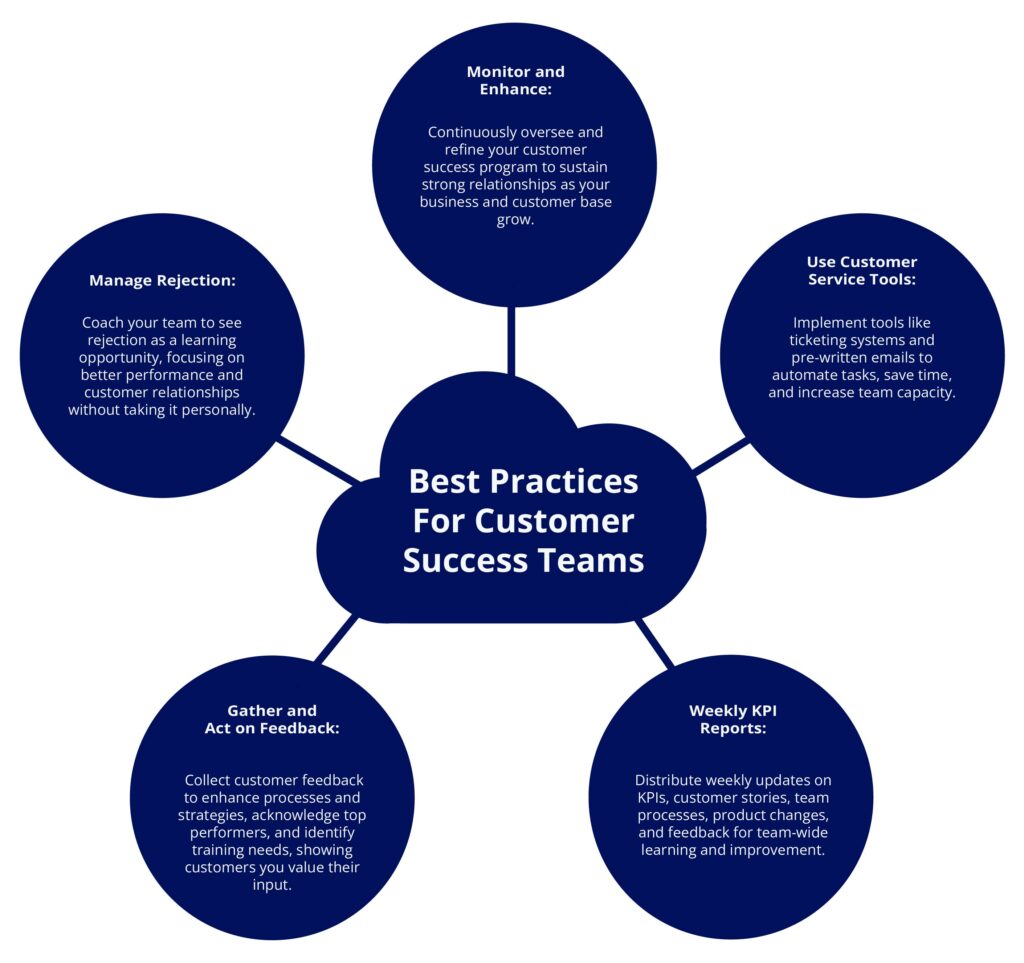
If you want to ensure the long-term success of your team, there are certain best practices that you can follow:
Conclusion
A robust customer success team goes beyond support and is the heartbeat of your business. It ensures customer satisfaction and retention, drives growth by fostering long-term relationships, and fosters a culture of excellence.
If you’re looking to build a remote customer success team, CloudTask Marketplace is your ideal partner.
CloudTask simplifies recruitment by providing access to over 500 skilled remote sales professionals with video profiles, extensive work experience, and transparent monthly rates.