Remote Work
The Future of Remote Work: Trends and Opportunities
Amir ReiterNovember 18, 2024

The rise of remote work has transformed how businesses grow and innovate. What started as a temporary solution is now a long-term strategy for many companies.
However, adapting to this shift presents challenges. Teams scattered across the globe face communication barriers, and some employers worry about maintaining productivity.
But here’s the truth: Companies that embrace remote work can tap into a global talent pool, cut costs, and boost efficiency. In fact, a recent study shows that remote workers are 13% more productive than their office-based counterparts.
In this blog, we’ll explore five key trends shaping the future of remote work and how they can help you stay competitive in 2024 and beyond.
1. Hybrid Work Leads 2024’s Work Culture Shift
The traditional 9-to-5 office model is quickly fading. Hybrid work has taken center stage, blending the benefits of remote and in-office work.
This balance allows employees to enjoy the flexibility of working from home while still maintaining the social and collaborative aspects of office life.
In 2024, hybrid work is projected to dominate workplace trends, with 85% of employees expressing a preference for this model. Employers who embrace hybrid work are not only meeting worker demands but also improving retention and engagement.
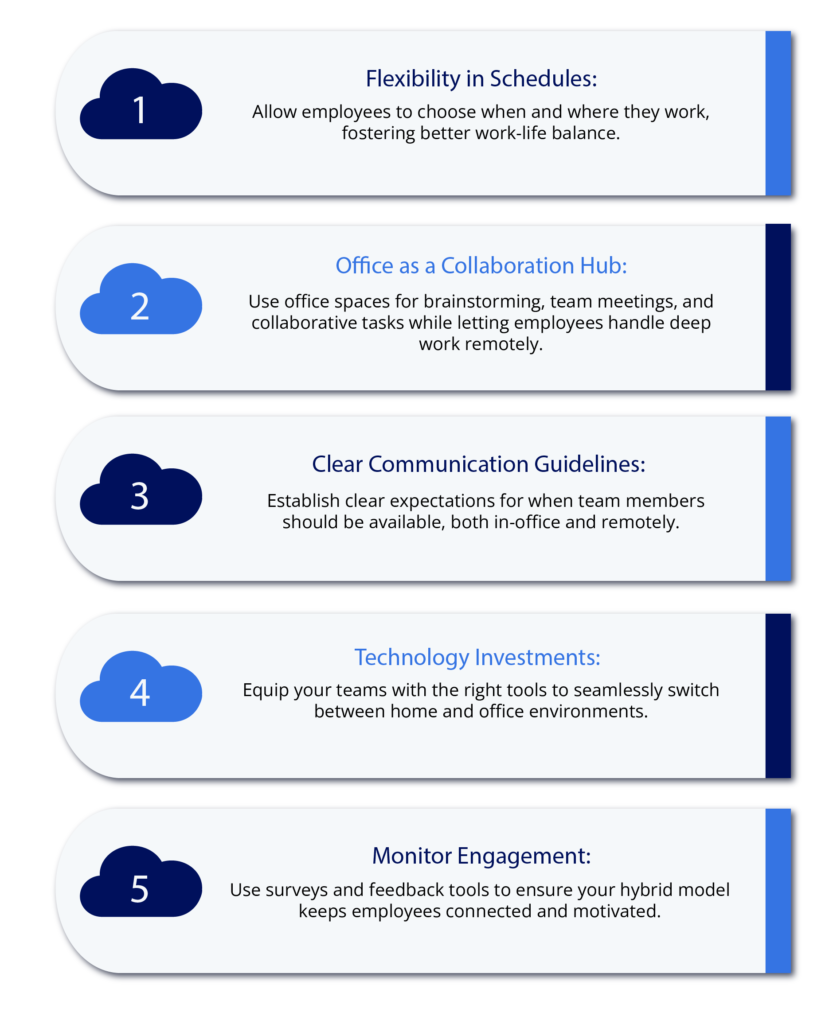
Here are the key elements to consider when adopting a hybrid work model:
2. Global Talent Pool Drives Innovation Worldwide
One of the most significant benefits of remote work is the ability to hire talent from anywhere in the world. No longer confined by geography, businesses can access diverse skill sets and innovative perspectives that weren’t available in local markets.
By 2028, it’s projected that 73% of all departments will have remote workers, making global hiring a necessity for companies wanting to stay competitive. Hiring across borders doesn’t just reduce costs, it fosters innovation by bringing in fresh ideas and approaches from different cultures.
Here’s how you can leverage a global talent pool:
- Expand Your Search Beyond Borders: Look for talent in regions that offer high-quality candidates with lower costs, such as Latin America or Eastern Europe.
- Cultural Training for Teams: Ensure your workforce understands cultural differences to enhance collaboration and avoid miscommunication.
- Localized Benefits and Perks: Tailor your benefits package to the needs and expectations of employees in different regions.
- Time Zone Optimization: Hire in overlapping time zones to ensure smoother handoffs and better collaboration across teams.
- Leverage Technology for Seamless Integration: Use project management and communication tools to keep globally distributed teams aligned and efficient.
3. Data-Driven Insights Boost Remote Team Efficiency
Data is becoming the backbone of effective remote team management. Companies are increasingly relying on real-time insights to monitor productivity, engagement, and overall team performance.
As of 2024, 66% of managers have reported better output from their remote teams due to the adoption of data analytics tools. These tools allow leaders to make informed decisions, optimize workflows, and identify issues before they escalate.
Here’s how you can use data to drive performance:
- Adopt Advanced Analytics Platforms: Invest in tools like Asana, Hubstaff, or Microsoft Viva to gain visibility into team activity, task completion, and overall productivity.
- Create Data-Driven KPIs: Set key performance indicators that reflect both individual and team goals, and review these metrics regularly to stay on track.
- Leverage Data to Offer Support: Use engagement and productivity data to identify team members who may need additional resources or flexibility.
- Optimize Team Processes: Use insights to remove bottlenecks in workflows, ensuring projects move smoothly from one stage to the next.
- Analyze Work Habits: Identify patterns that enhance productivity, such as optimal working hours or preferred tools, and implement them across the team.
4. Freelancers Surge as a Workforce Solution
Freelancing has seen rapid growth, becoming a core part of how businesses fill skill gaps and scale teams. Currently, freelancers represent 39% of the U.S. workforce, and that number is expected to rise to 50% by 2027. Companies are turning to freelancers for their flexibility and cost-efficiency. Whether it’s short-term projects or ongoing contracts, freelancers offer businesses the ability to scale quickly without the overhead of full-time hires.
Here’s how to make the most of the growing freelance workforce:
- Hire for Specialized Projects: Bring in freelancers with niche skills for projects that require specific expertise or short-term focus.
- Scale Teams Quickly: Use freelancers to scale your workforce during peak seasons or for specific campaigns without long-term commitments.
- Save on Overhead Costs: Freelancers typically don’t require benefits or long-term employment costs, making them a budget-friendly option for many companies.
- Diversify Talent Pools: Tap into a wide range of global talent, leveraging freelancers from different regions to bring new perspectives and ideas.
- Flexible Contracts: Negotiate flexible terms to suit your project needs, whether it’s part-time, contract-based, or on-demand work.
5. Employee Well-Being Becomes a Critical Focus
With more employees working remotely, well-being is now a company’s central concern. In 2024, 63% of remote workers have reported experiencing burnout, highlighting the need for better mental health support and work-life balance.
Employers who ignore these issues risk losing valuable talent and seeing a drop in productivity. On the flip side, businesses that prioritize employee well-being see clear benefits—35% higher productivity and a 54% reduction in stress. Making well-being a priority is not just a responsibility, but also a competitive advantage.
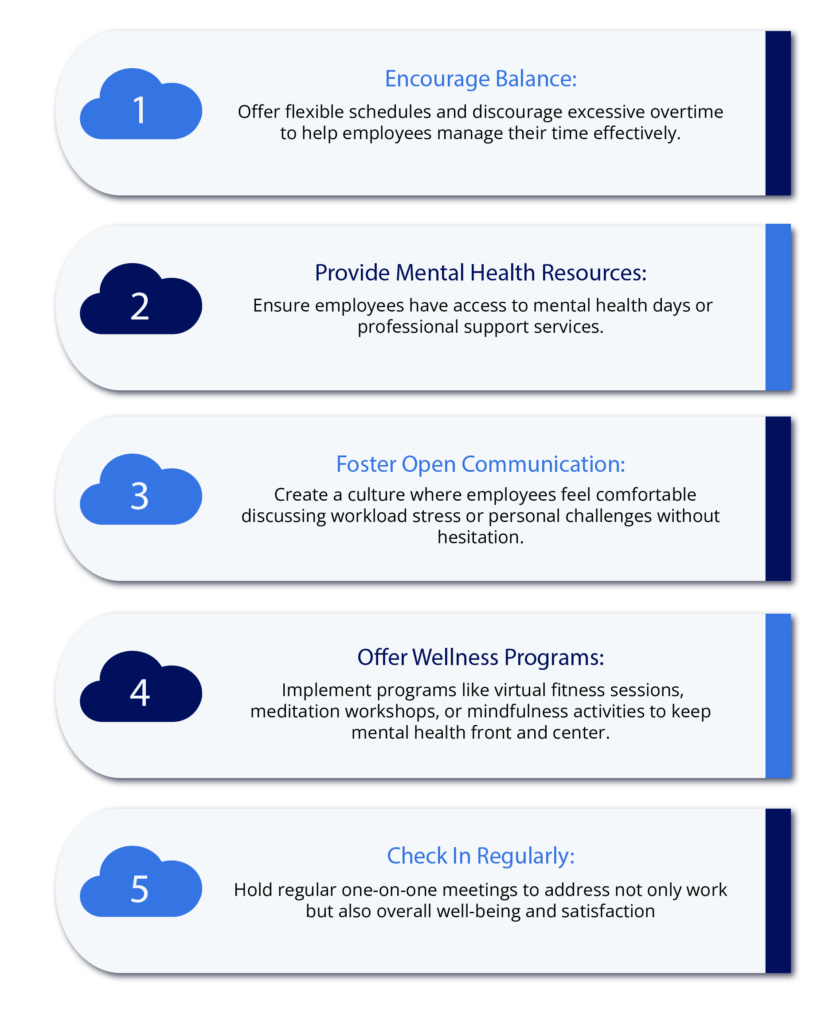
Here’s how to support well-being in remote teams:
Final Thoughts
Remote work has opened the door to a world of opportunities for employers. The ability to hire globally is no longer just a trend but a strategic move shaping the future of work.
At the same time, addressing challenges like employee well-being and maintaining engagement in hybrid models remains crucial for long-term success.
As you adapt to these changes, remember that the quality of your hires will define the strength of your remote team. A thoughtful approach to recruitment, supported by the right tools, ensures your business remains agile and competitive.
If you’re looking to hire remote candidates for your sales roles, CloudTask provides a streamlined platform to help you find the right talent.
Explore the CloudTask Marketplace today to start building a team that drives results.
Frequently Asked Questions
How can I balance flexibility in a hybrid work model without losing productivity?
Hybrid work thrives when there’s a balance between flexibility and structure. Setting clear guidelines for remote workdays, defining in-office collaboration times, and using productivity tracking tools ensure that flexibility doesn’t come at the cost of efficiency.
What are the risks of hiring freelancers versus full-time employees?
Freelancers offer flexibility and cost savings but may not always be available for long-term projects. For critical, ongoing tasks, you might want to combine freelance support with full-time hires for stability.
How can I prevent burnout in remote employees while maintaining high performance?
Burnout can be avoided by encouraging healthy work-life balance, offering flexible schedules, and regularly checking in on employees’ well-being. Fostering open communication also helps teams stay motivated and productive.