Last updated: October 29, 2026
The Short Answer
Commission-only sales reps work in a narrow set of cases: short sales cycles, a proven product, high deal value and reps who sell outside your office. For most B2B teams they fail, because good reps will not wait months for a first paycheck.
The Bridge Group's 2025 report shows the typical SDR plan pays 68% base and 32% variable.
I started at CloudTask as an SDR 8 years ago and now run revenue, so I have seen both sides of this deal. This guide covers when commission-only works, what goes wrong, the legal rules in the US and the options most companies end up choosing instead.
What Is a Commission-Only Sales Rep?
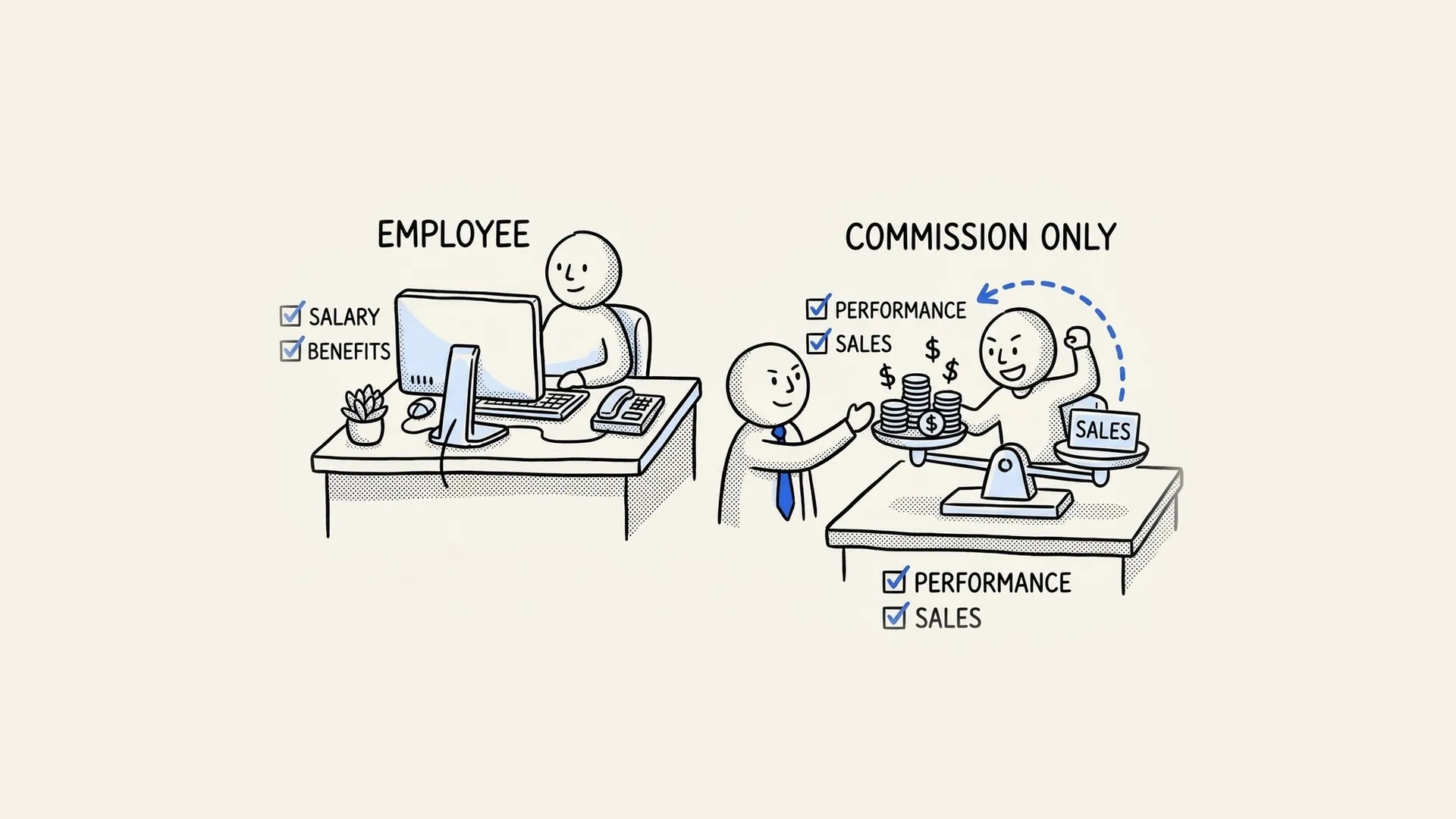
A commission-only rep earns no base salary. All pay comes from a percentage of the sales they close, or a fixed amount per deal or per meeting. Most commission-only reps work as independent contractors, and many sell for several companies at once.
Common plan types:
| Plan type | How it pays | Fits |
|---|---|---|
| Straight commission | A fixed % of each sale | Simple products, steady deal size |
| Tiered commission | The % rises after the rep passes set targets | Teams that want to reward top months |
| Residual commission | The rep keeps earning on renewals or recurring revenue | Subscriptions and service contracts |
| Pay per meeting | A fixed amount per qualified meeting held | Appointment setting, where your team closes |
Do Commission-Only Sales Models Work?
Commission-only sales models work when 4 things are true at the same time. Base-plus-commission plans stay the norm, with a 68:32 mix for SDRs in The Bridge Group's 2025 report.
The 4 conditions:
- The sales cycle is short. The rep sees money within weeks, not quarters.
- The product already sells. You have proof that buyers say yes, so the rep is not betting on an untested pitch.
- The deal value is high enough. A few deals a month must add up to a real income.
- The rep brings their own network. Industry reps and independent agents with existing relationships close faster.
If any of these is missing, expect turnover. A rep with no base salary keeps selling for you only while your product is the easiest one in their bag to close.
Key point: commission-only shifts risk to the rep. Strong reps price that risk in, so they either avoid the role or treat your product as a side line.
Pros of Hiring Commission-Only Sales Reps
- Low fixed cost. You pay only when a deal closes.
- Fast to start. Independent reps can sell from week 1 without a full hiring process.
- Access to networks. Experienced industry reps bring relationships you do not have.
- Easy to test a market. You can try a new region or segment without adding salaries.
Cons of Hiring Commission-Only Sales Reps
- Weak commitment. Many reps sell several products. Yours gets attention only when it is the easiest to sell.
- High turnover. Slow months push reps to jobs with a base salary, and you restart recruiting.
- Little control. Contractors decide how, when and what they sell. You cannot require them to follow your process without risking misclassification.
- Short-term selling. Reps paid only on the close have little reason to qualify well or care about onboarding and renewals. Bad-fit customers churn later.
- Long cycles break the model. On a 6-month cycle, the rep waits half a year to earn. Most drift to faster deals.
- Brand risk. Pressure to close can lead to overpromising, and the customer blames your company, not the rep.
Is Commission-Only Legal in the US?
Commission-only pay is legal in the US for outside sales employees and for true independent contractors, under Department of Labor and IRS rules. Inside sales employees need at least minimum wage.
- Outside sales employees can be paid commission only. The Department of Labor's Fact Sheet #17F exempts them from minimum wage and overtime when their main duty is selling away from your place of business. The fact sheet states that outside sales "does not include sales made by mail, telephone or the Internet."
- Inside sales employees who sell by phone, email or video do not qualify for that exemption. In most cases, they must earn at least minimum wage for every hour worked, so a pure commission plan needs a draw or a floor.
- Independent contractors can be paid commission only, but the classification has to be real. The IRS looks at behavioral control, financial control and the relationship between the parties. If you set their hours, train them on your script and they sell only for you, they may be employees.
State laws add more rules on written commission agreements and payment timing. Talk to an employment lawyer before you launch a commission-only plan. If you hire outside the US, labor rules change again; see our guide to labor legislation in Latin America.
How to Set a Commission Rate
Work backward from what a good rep needs to earn:
- Set target earnings. Pick what a strong rep should make in a year at quota.
- Estimate realistic sales. Use your own data on deals per month and average deal size.
- Divide. Target earnings divided by expected annual sales gives the rate.
- Check your margin. If that rate breaks your unit economics, commission-only does not fit your product.
Example: if a strong rep should earn $80,000 a year and can close $400,000 in sales, the rate is 20%. If they can only close $200,000, the rate climbs to 40%, which most businesses cannot pay.
Write the plan down: rate, what counts as a closed deal, when you pay, what happens on refunds or cancellations and how the plan ends.
Alternatives to Commission-Only Sales Reps
| Option | How it works | Best for |
|---|---|---|
| Base plus commission | A lower base with meaningful variable pay | Most B2B teams; the SDR benchmark is 68:32 |
| Draw against commission | An advance the rep repays from future commission | New reps ramping on a longer cycle |
| Pay per meeting, your team closes | A rep books meetings; you close | Founders who close well but lack pipeline |
| Salaried rep in Latin America | A full-time rep on base plus commission, in US time zones | Teams that want control at a lower cost |
The last option is where CloudTask comes in.
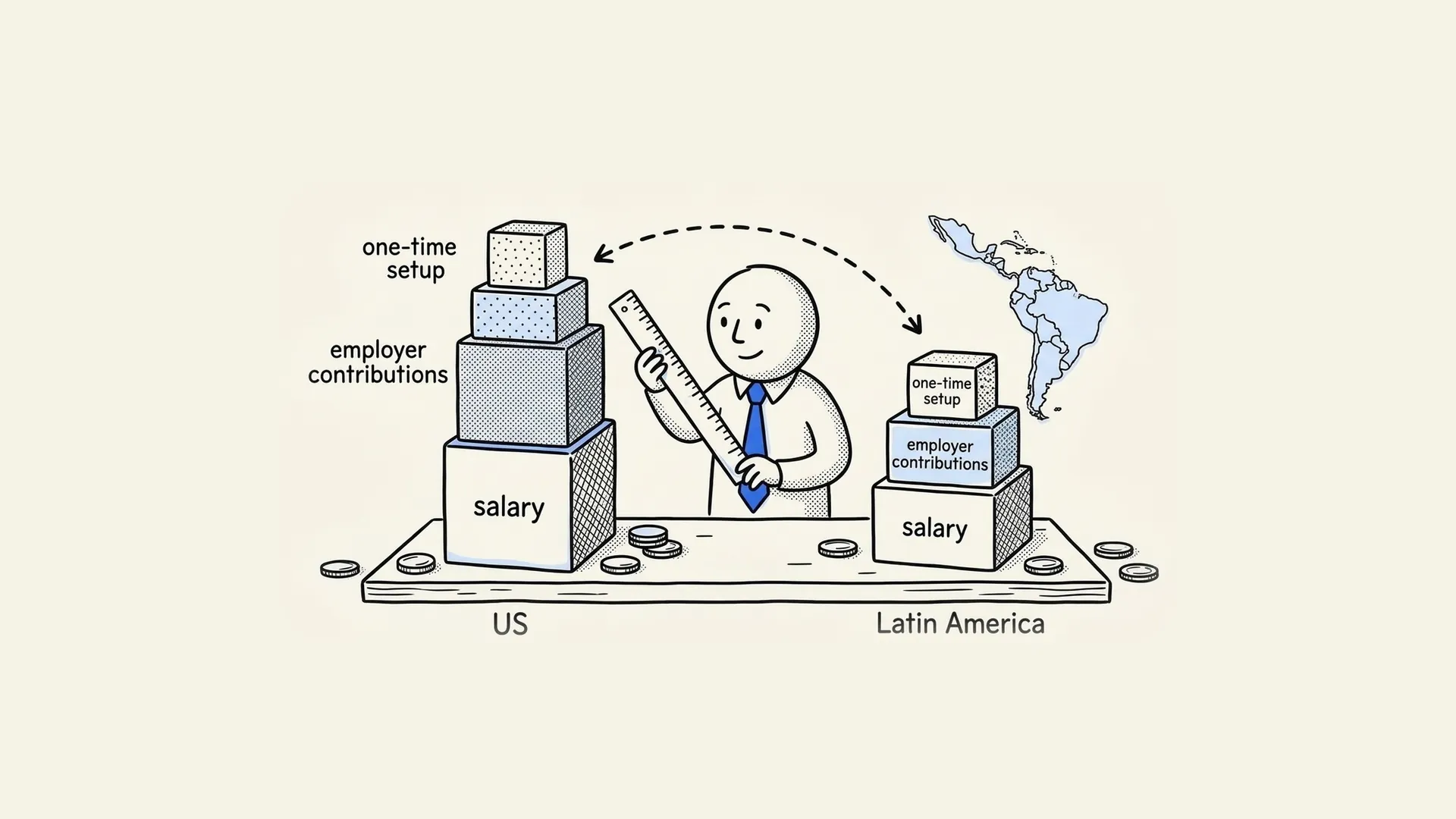
A full-time rep in Latin America sells only your product, follows your process and works US business hours, and CloudTask clients save up to 75% compared with US hiring costs. We send 3 to 5 screened SDR or Account Executive profiles within 48 hours.
Our comparison of in-house SDRs vs outsourced SDR firms covers another option for pipeline.
Key Takeaways
- Commission-only works with short cycles, proven products, high deal values and reps who bring their own network.
- In most B2B teams it leads to turnover, low commitment and short-term selling.
- In the US, only outside sales employees are exempt from minimum wage; inside reps need a floor or a draw.
- Independent contractor status depends on control, not on the contract title.
- Base plus commission is the norm: the SDR benchmark is 68% base and 32% variable (Bridge Group, 2025).
Frequently Asked Questions
Do commission-only sales models work?
They work for short sales cycles, proven products, high deal values and reps who bring their own network, such as independent industry agents. For most B2B companies with longer cycles they lead to turnover and weak commitment, since reps put their time into whichever product pays fastest. Most B2B teams pay a base plus commission instead.
Is it legal to pay sales reps commission only?
In the US, it is legal for outside sales employees, who sell away from your place of business, and for true independent contractors. Inside sales employees who sell by phone or online usually must earn at least minimum wage for all hours worked, according to the Department of Labor. State rules also apply, so check with an employment lawyer.
What is a typical commission rate for commission-only reps?
Rates vary by industry, deal size and margin, so no single number fits. Set the rate by dividing the yearly income a strong rep should earn by the sales they can realistically close. If a rep should earn $80,000 and can close $400,000, the rate is 20%.
How do I hire a commission-only sales team?
Write a clear plan with the rate, payment timing and what counts as a closed deal. Recruit through industry networks, independent rep directories and referrals, and look for reps who already sell to your buyers. Give them sales materials and a demo process, and review results monthly. Get legal advice on classification before you start.
What is the best alternative to commission-only sales reps?
For most B2B companies, the best alternative is base plus commission. A smaller base keeps good reps through slow months, and the variable part keeps the incentive. If cost is the concern, hiring a full-time rep in Latin America keeps base plus commission and costs less than a US hire.
Build a Sales Team That Stays
Get matched with 3 to 5 screened sales reps in 48 hours, or browse the roles we hire for.