ALL ROLES / EMBEDDED SOFTWARE ENGINEERS
Hire an embedded software engineer who ships firmware that holds up in the field
Drivers, RTOS tasks, board bring up, connectivity and over the air updates. A dedicated embedded engineer from Latin America who works inside your product team on your hardware, instead of a project handed to an outside firm.
TRUSTED BY TEAMS WHOSE CLOUDTASK HIRES HAVE STAYED 5 TO 8 YEARS




How it works
How do I hire an embedded software engineer?
You do one thing: interview. We handle everything else.
Tell us what you need
5 minutes. The role, the motion, the tools, the comp band. That is all we need to start.
We match you in 48 hours
3 to 5 candidates matched to your role, budget and time zone.
Interview and choose
Interview the candidates you want and hire when you are ready.
Start working. We handle the rest.
We coordinate onboarding. On Managed Staffing, we also handle payroll and compliance across LATAM.
WHY TEAMS TRUST CLOUDTASK
What you get with every hire
One engineer, your product
A dedicated person who learns your boards, your codebase and your release process. Not a statement of work that ends when the milestone is signed off.
Same day as your hardware team
Latin America and the Caribbean overlap the US working day, so a failing build or a strange trace on the bench gets looked at together, live.
Checked against your stack
Your microcontroller family, your RTOS or embedded Linux, your toolchain and your protocols. Verified per candidate against the stack you name.
Replacement guarantee
24 months on Managed Staffing, 6 months on Direct Hire. A firmware roadmap cannot wait for a second search, so the guarantee covers the case where the fit is wrong.
WHY CLOUDTASK
Staffing with numbers behind it
10,000+
hires placed
since 2016
85%
still in seat
past 90 days
24 months
replacement guarantee
on Managed Staffing
12
countries
across Latin America and the Caribbean
PRICING MODEL
Managed Staffing.
Managed Staffing is open to every role we place. We find the person, handle payments and compliance, and stay involved after the hire with check-ins, visibility, and escalation when something is off. You get the person. We keep the machine running. For roles that create demand, outbound SDRs, BDRs, demand generation and full-cycle AEs, Managed Staffing runs on a 6-month minimum term.
Pay
One all-in monthly rate
Per person. That is the number, and there is nothing added to it.
In the monthly rate
- Sourcing from the CloudTask talent network
- Screening and vetting
- Matching coordination
- Worker payments
- Compliance and employment administration
- Onboarding check-ins at day 7, 30 and 60
- Ongoing check-ins with the hire and with you
- Time and activity tracking, on by default
- Performance escalation
- 24-month replacement guarantee. Replacements not capped.
- Health benefits available on request
- Equipment benefits available on request
Stays with you
- The work itself
- Priorities and direction
- Who you hire
$299 deposit per hire. Not a subscription. Credited toward that hire's placement fee.
Start your searchPRICING MODEL
Direct Hire.
Direct Hire is open to every role we place. We find the person, vet them, and hand them over. You employ them, you manage them, you own the relationship from day one. Roles that create demand usually land here, because live call feedback and daily coaching work best coming straight from your sales leader, and there is no minimum term.
Pay
20% to 30%
Of first-year base salary. One time, quoted per role, paid when they accept.
In the fee
- Sourcing from the CloudTask talent network
- Screening and vetting
- Shortlist of matched candidates
- Interview coordination
- Offer support
- 6-month replacement guarantee. 1 replacement, same job description.
Yours when they accept
- Employment and payroll
- Compliance and employment administration
- Ongoing management
- Time and activity tracking
- Health benefits and equipment benefits
$299 deposit per hire. Not a subscription. Credited toward that hire's placement fee.
Start your searchHow CloudTask compares
Run the numbers. We did.
The same role, 3 ways to fill it.
Swipe to compare
| US Direct Hire | Staffing Agency | ||
|---|---|---|---|
| Time to First Interview | 48 hours | 3 to 6 weeks | 2 to 4 weeks |
| Payroll & Compliance | Included on Managed Staffing | You manage | Included in rate |
| Vetting Process | Human + AI verified | You screen | Recruiter screened |
| Candidate spam | Screened out before you see a profile | Common | Low |
| Tool Verification | Verified per candidate | Self-reported | Rarely verified |
| Free Replacements | 24 months on Managed Staffing, 6 months on Direct Hire | None | Variable |
Testimonials
Trusted by teams that hire with us
-
LATAM has been a gold mine for talent. Our CloudTask hires understand our company culture and mission, and they connect with our customers in a way that drives high NPS and CX scores.
 David Barrett CEO, Expensify
 -
At first we were an SF-based team only. Then I met Amir Reiter back in 2018. After visiting Medellín, I knew LATAM would be key to our growth and success.
 Tim Zheng CEO, Apollo.io
 -
After meeting my CX and CS team in Medellín, we immediately loved the culture and the work ethic. As a European-HQ company, we found LATAM to be perfect to service our American clients.
 Carl Carell CRO and Co-founder, GetAccept
SKILLS
Top capabilities to look for in an embedded software engineer
Embedded work is software with physical consequences. These are the capabilities that decide whether your device boots, stays up and can be fixed after it ships.
-
C and C++ close to the metal
Memory that is managed by hand, interrupts, volatile registers and code that has to fit a flash and RAM budget. Modern C++ or Rust where your codebase uses them.
-
RTOS and embedded Linux
Tasks, priorities, queues and timing on FreeRTOS, Zephyr or a vendor RTOS, or kernel drivers, device trees and Yocto builds on embedded Linux. Know which one you run.
-
Board bring up and drivers
Reading a datasheet and a schematic, writing drivers for SPI, I2C, UART and CAN peripherals, and getting a new board revision to boot.
-
Debugging with real tools
JTAG and SWD debuggers, logic analyzers, oscilloscopes and trace output. The hard bugs in embedded systems are timing and hardware bugs that a print statement will not find.
-
Connectivity and updates
Bluetooth Low Energy, WiFi, cellular or LoRa stacks, and a safe over the air update path with rollback, so a bad release does not brick devices in the field.
-
Power and performance
Sleep modes, clock settings and measuring current draw, for devices that run on a battery or have a hard real time deadline.
-
Testing and safety discipline
Unit tests on the host, hardware in the loop tests and static analysis. Experience with coding standards or functional safety processes if your market requires them.
-
AI where it saves a step
Drafting boilerplate, reading unfamiliar code and writing first versions of documentation. Useful for speed, always reviewed against the datasheet before it ships.
HIRING GUIDE
Embedded software development services or a dedicated engineer?
Most companies searching for embedded software development services are choosing between hiring a firm for a project and adding an engineer to their own team. This guide covers what an embedded software engineer does, when each option is the right one, and what to check before you hire.
What does an embedded software engineer do?
Writes and maintains the software that runs on a device: the firmware on a microcontroller, the drivers that talk to sensors and radios, the scheduling that keeps real time tasks on time, and the update path that lets you fix a device after it ships.
The work sits between hardware and software. A good embedded engineer reads a schematic as comfortably as a codebase, and spends as much time on a debugger and a logic analyzer as in an editor.
Should I hire a development firm or a dedicated engineer?
Engineering firms such as ScienceSoft, Witekio, Fidus and Cleio rank for this search, and a firm is the right choice for a defined project with a clear end: a proof of concept, a one-time port, or specialist work your team will never repeat.
A dedicated engineer is the right choice when the product keeps evolving: new board revisions, new features, field issues and updates for years after launch. That knowledge of your hardware and your codebase is expensive to rebuild every time a project ends.
When should you not hire a dedicated embedded engineer?
When the work is export controlled or a customer contract requires US persons. A hire outside the United States is not an option there, whatever the skills.
It is also the wrong hire when you need someone at the physical bench every day with prototypes that cannot be shipped, or when you have a single, short piece of work. A local contractor or a firm will serve you better in both cases.
How does remote embedded work actually run?
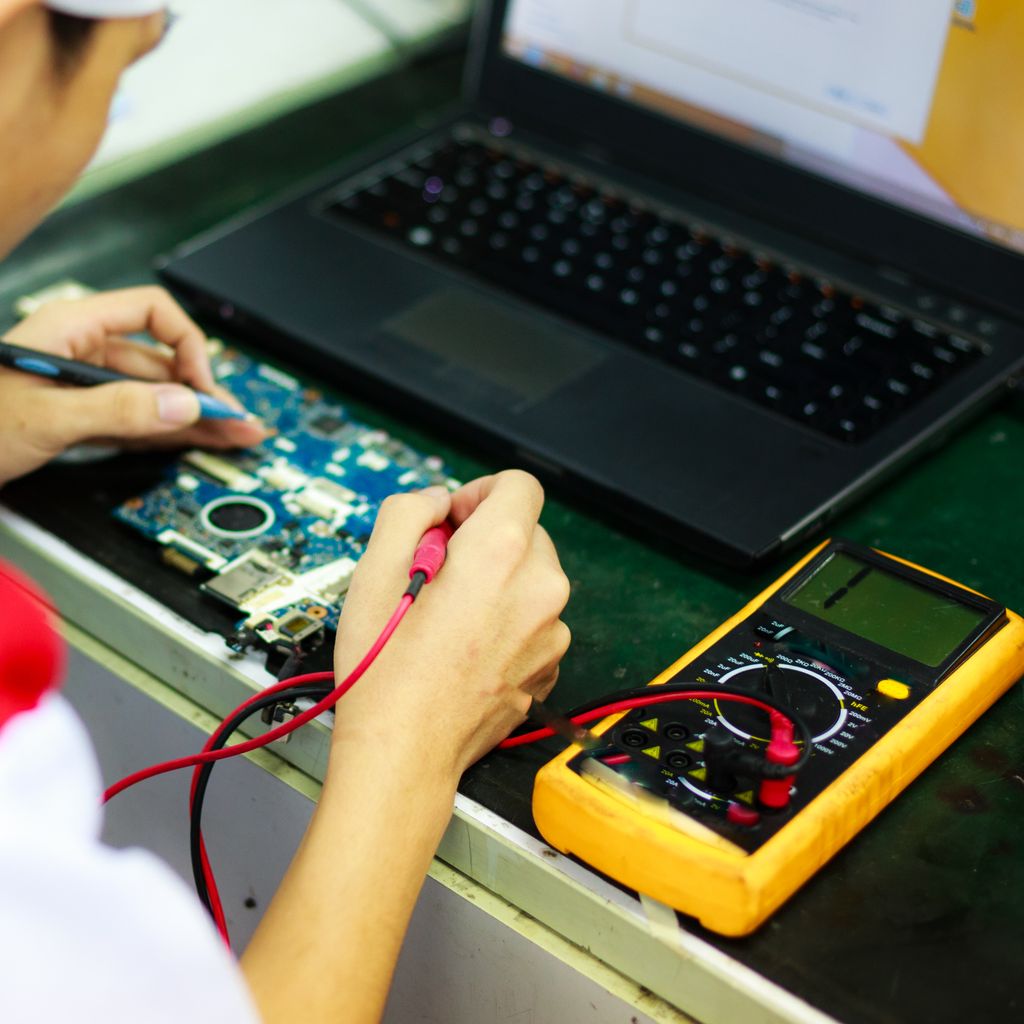
The engineer needs the hardware. Plan to ship development boards, debug probes and any fixtures to them, and to keep a spare set so a broken board does not stop the week.
Teams that do this well add a remote lab: a board wired to a power switch, a debugger and a camera, reachable over the network. Say in the brief what equipment you can ship, so the search covers people who have worked that way.
Microcontroller, RTOS or embedded Linux?
Hire for the platform you run. Bare metal and RTOS work on a microcontroller is a different skill set from kernel drivers and build systems on embedded Linux, and very few engineers are strong at both.
Name the chip family, the RTOS or distribution, the toolchain and the protocols in the brief. That is what the search is matched against.
What should I check in the interview?
Ask about the hardest bug they have found. You want a story about timing, memory corruption or a hardware fault, and how they narrowed it down with a debugger or an analyzer. Vague answers here are a signal.
Then give them a datasheet page for a peripheral they have not used and ask how they would write the driver and how they would test it. The way they read the document tells you more than a coding quiz.
Red flags in embedded software engineer candidates
A hard bug with no method. Ask about the hardest bug they have found. A story without a debugger, an analyzer or a clear narrowing down of the cause tells you they have not chased a timing or hardware fault to its root.
Print statements as the only tool. If every bug they describe was found with log output, they have not yet worked the timing and hardware bugs that a print statement will not find.
Skipping the datasheet. When you hand them the datasheet page, watch whether they read it before talking about code. A candidate who starts writing the driver from memory, and has no plan to test it, will write drivers that work until the hardware does something the document warned about.
Updates without rollback. Ask how devices they worked on were updated after they shipped. No answer on what happens when an update fails means your first bad release can brick devices in the field.
Equally strong on every platform. A candidate who claims the same depth in bare metal or RTOS work and in embedded Linux drivers deserves specific questions on the one you run, because very few engineers are strong at both.
How much does it cost to hire an embedded software engineer?
It depends on seniority, the platform, the language requirement and the country the person works from, and any single number describes one scenario and calls it a price.
What is worth understanding is the shape. On Managed Staffing it is one all-in monthly rate per person with payments, compliance and replacement cover inside it. On Direct Hire it is a one-time fee and the person goes on your payroll. We quote your number before you interview anyone.
Why hire an embedded software engineer in Latin America?
Overlap. Embedded work involves your hardware engineers, your test team and sometimes your manufacturer, and Latin America and the Caribbean share most of the US working day, so a problem on the bench gets worked on together.
The second reason is communication. Design reviews, bug reports and handovers happen in English, and we screen that live on a call rather than inferring it from a profile.
How does CloudTask hire for this role?
You send the platform, the stack, the kind of work and the hours you need covered. We source against that brief and come back with 3 to 5 matched profiles within 48 hours, each one screened on a live call and verified against the stack you named.
You interview and choose. On Managed Staffing we handle payments, compliance and onboarding and stay involved with check-ins. On Direct Hire the person joins your payroll from day one. Both carry a replacement guarantee: 24 months on Managed Staffing, 6 months on Direct Hire.
FAQ
The fine print, in plain terms.
What do embedded software developers do?
Will AI replace embedded programmers?
Can an embedded engineer work remotely?
How fast can an embedded engineer start?
What is the $299 for?
Why is there no number on the monthly rate?
Who is the legal employer?
How does tracking work, and can I turn it off?
What happens if the person does not work out?
Is there a platform or subscription fee?
Ready to hire?
3 to 5 matches in 48 hours. Start with a quick role brief to get your shortlist.