Last updated: September 21, 2026
The Short Answer
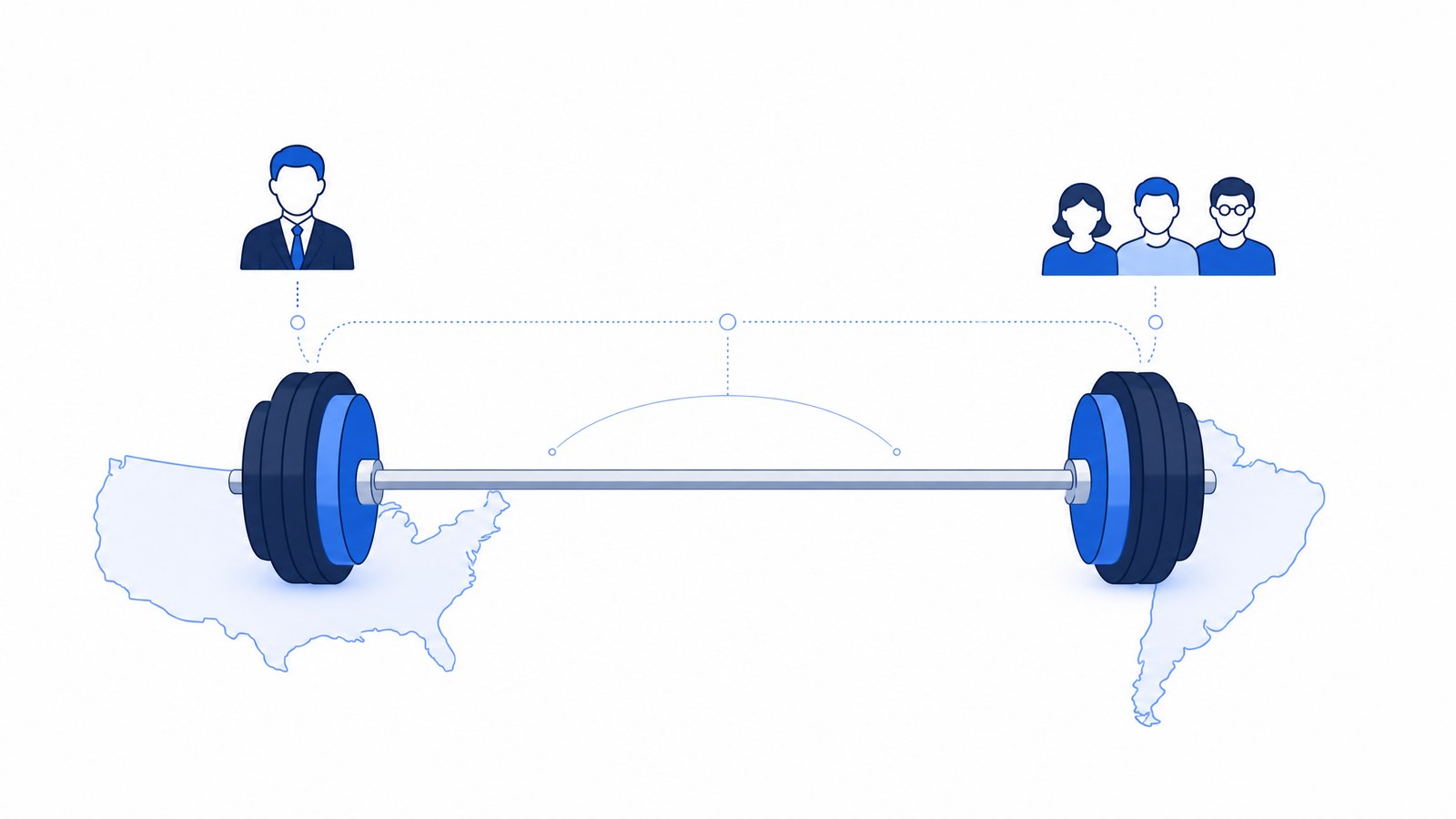
Expensify runs the barbell. Sales leadership sits in the United States. Sales execution sits in LATAM, hired through CloudTask and other partners. A US leader owns the number.
The team scaled from 24 to 48 account executives after the company went public. Those account executives have averaged more than 5 years of tenure. Expensify has worked with CloudTask for 8 years.
Most people read that as a cost story. It is a management story, and the difference is the whole point.
Expensify is named here with written permission.
Who Expensify Is
Expensify makes expense and spend management software. David Barrett and Witold Stankiewicz founded it on 1 May 2008. It is headquartered in Portland, Oregon and trades on Nasdaq under EXFY.
The company describes itself as trusted by 15 million members worldwide. It is a public company, so every quarter its results are reported and examined.
That last fact matters more than it looks. A public company cannot hide a sales team that does not perform.
The Org
48 account executives, up from 24 after the initial public offering.
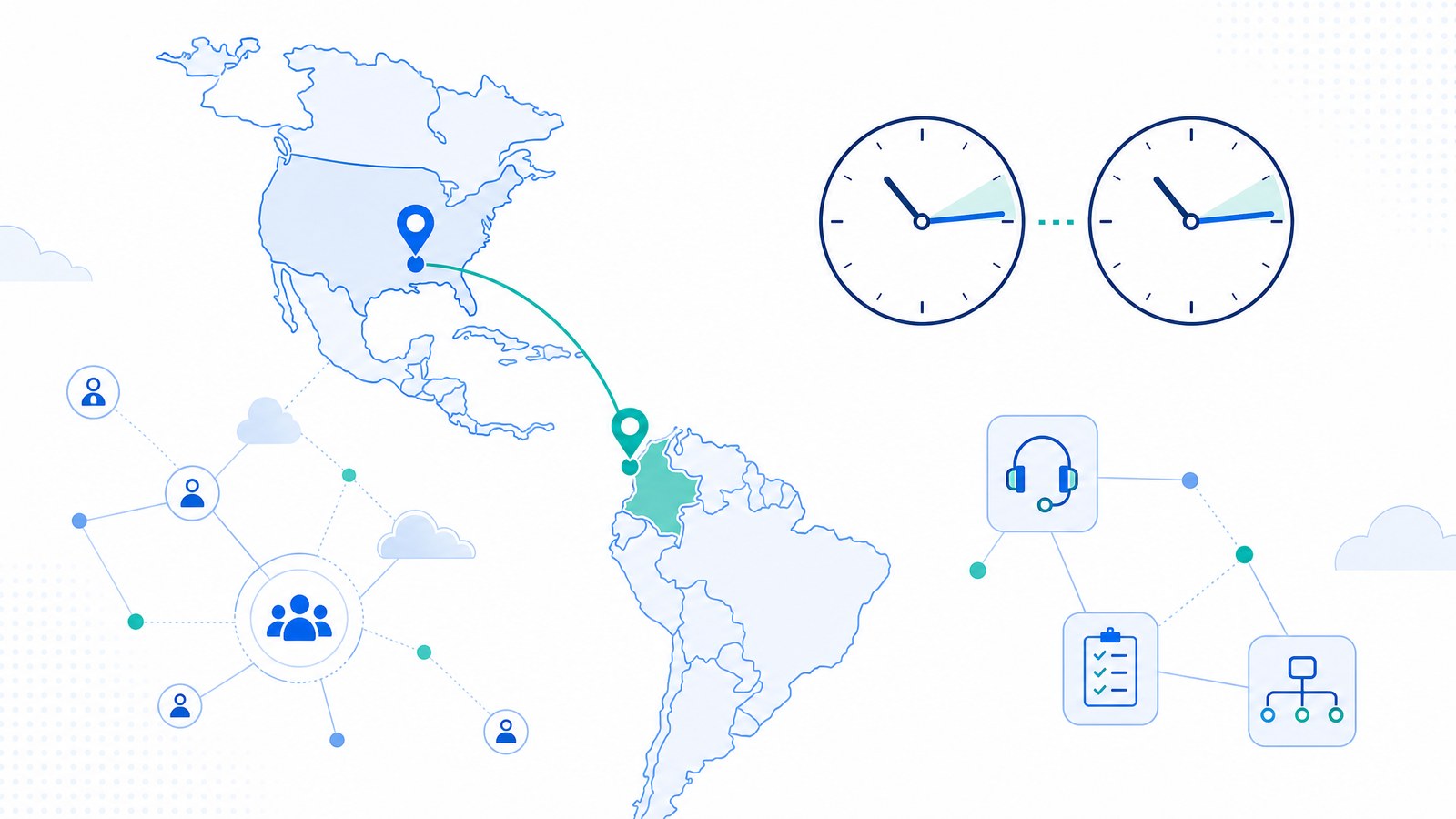
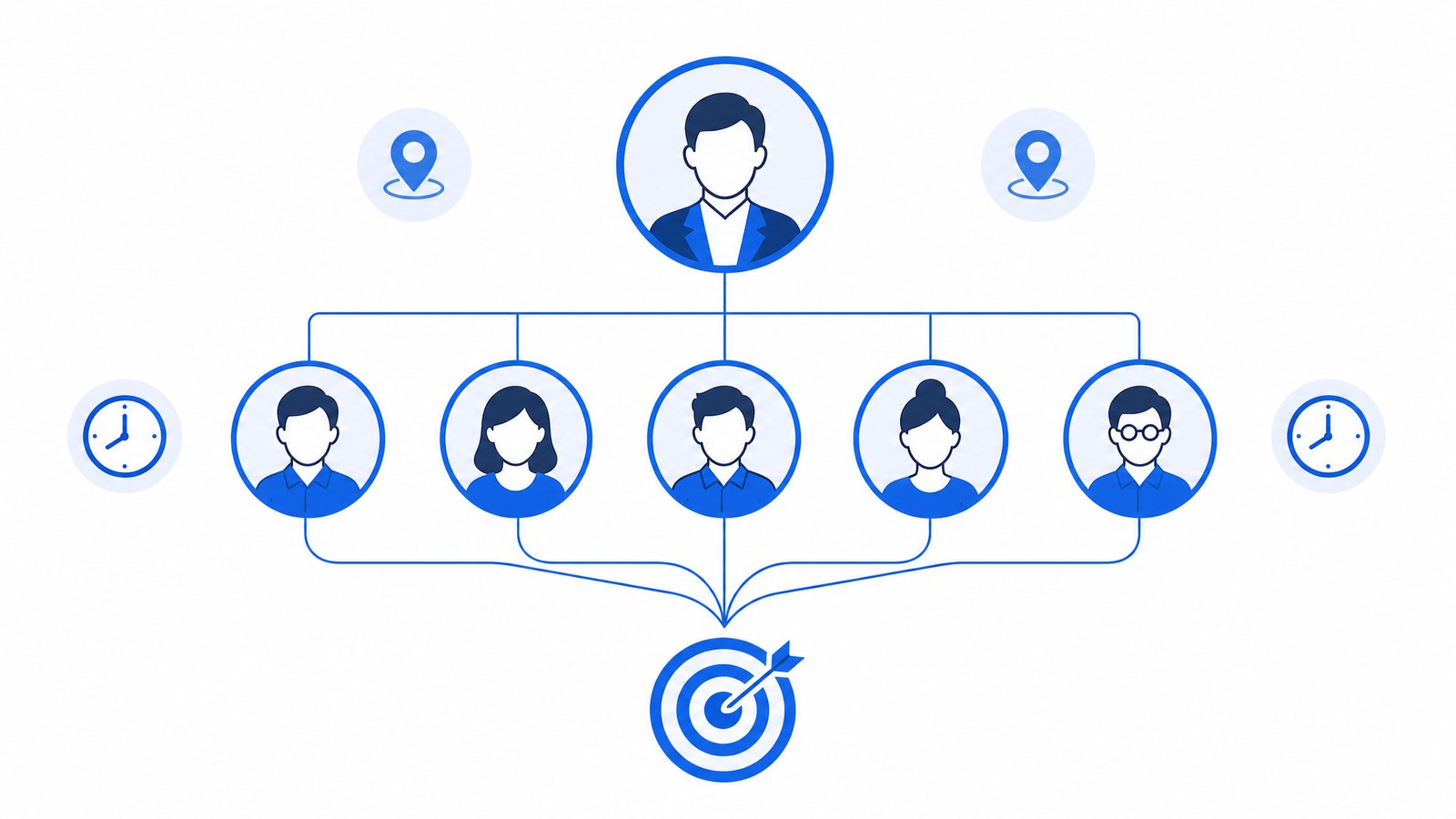
They sell to US customers during US hours. They report to a sales leader in the United States, and that leader owns the number.
They are paid the way a sales team is paid: base salary plus commission on won deals.
Key point: A team paid on won deals is a revenue team, not a support desk. That single compensation decision changes what the role attracts and what it produces.
For the full structure and a worked cost example, read our guide to the barbell hiring model. The Expensify engagement is documented in the Expensify case study.
Why a Public Company Builds It This Way
Expensify reports results every quarter. Every seat shows up in the numbers eventually.
So the split is deliberate. The strategic layer stays where the customers, the capital and the product decisions are. The execution layer sits where the same work costs less and the working hours still overlap.
That is the barbell. Weight at both ends, very little in the middle.
The company automates and still hires people to sell
Expensify is not sentimental about manual work. On 8 June 2026 it launched an integration built on the Model Context Protocol. It lets AI assistants including ChatGPT, Claude and Cursor query Expensify data directly through a secure connection.
The company shipped that, and it still employs 48 account executives.
Read the 2 decisions together and you get the rule. Repeatable work goes to software. Conversations go to people. A meaningful part of that human layer sits in LATAM.
The Trap
The mistake is reading Expensify as a cost exercise.
3 things hold the structure together, and only 1 of them is location:
- A US leader owns the number. Accountability is not shared across borders. It sits with a named person.
- The LATAM team has a manager with time to coach. Tenure of more than 5 years is not an accident of geography. It is a management outcome.
- Commission points both locations at the same result. Nobody is optimizing for activity while someone else is measured on revenue.
Copy the org chart without the manager and you get 2 teams that each assume the other owns the result.
Key point: The barbell is an accountability design that happens to save money. Treat it as a savings exercise and it stops working.
What Expensify Says
David Barrett, Chief Executive Officer of Expensify:
LATAM has been a gold mine for talent. Our CloudTask hires understand our company culture and mission, and they connect with our customers in a way that drives high NPS and CX scores.
Note what is being claimed. Not lower cost. Culture fit, mission alignment and customer connection, measured on the company's own service metrics.
What To Take From It
4 things transfer to any revenue team considering this structure.
- Name the owner before you name the location. Decide who carries the number. Everything else is an implementation detail.
- Pay the execution layer like a revenue team. Base plus commission on won deals attracts closers. An hourly rate attracts task completion.
- Budget for a manager, not only for seats. The manager is what converts a group of hires into tenure. It is the line item most often cut and most often missed.
- Automate the repeatable part first. Expensify shipped an AI integration and kept its sellers. Work out which of your tasks is a workflow and which is a conversation.
On tenure specifically, the mechanics are in our guide to why LATAM hires do not stick.
How CloudTask Places Both Sides
CloudTask is a staffing and recruiting company for US revenue teams hiring in LATAM. We place both ends of this structure.
US sales leaders go through Direct Hire, at 20 to 30 percent of first year base, quoted per role. It carries a 6 month replacement guarantee covering 1 replacement against the same job description.
LATAM execution teams go through Managed Staffing, at one all-in monthly rate per person. CloudTask acts as vendor of record and handles payroll, benefits and compliance. It carries a 24 month replacement guarantee, and replacements are not capped.
Replacement is the only guarantee CloudTask makes. We do not guarantee revenue, quota attainment or that any individual hire will work out.
Our matching team sources vetted professionals across 12 LATAM countries and returns matches in 48 hours. Every candidate records a video introduction. All have strong, near accent free English.
Key Takeaways
- Expensify keeps sales leadership in the United States and sales execution in LATAM, hired through CloudTask and other partners.
- The team went from 24 to 48 account executives after the company went public, with average tenure above 5 years across an 8 year relationship.
- The account executives sell to US customers in US hours and report to a US leader who owns the number. They earn base plus commission on won deals.
- On 8 June 2026 Expensify launched a Model Context Protocol integration for AI assistants, and still employs 48 sellers.
- The structure holds because of accountability and management, not location. Copy the org chart without the manager and it fails.
- CloudTask places US leaders on Direct Hire and LATAM execution teams on Managed Staffing, which carries a 24 month replacement guarantee with replacements not capped.
Frequently Asked Questions
What is the barbell hiring model?
A team design that puts weight at 2 ends. Strategic, relationship-heavy roles stay in the US market. Execution-heavy roles scale in LATAM. Very few roles sit in between. Expensify runs it with US sales leadership and LATAM account executives.
Do the LATAM account executives work US hours?
Yes. They sell to US customers during US business hours. LATAM sits 0 to 3 hours from US time zones, which is what makes same-day selling possible without a night shift.
How are they paid?
Base salary plus commission on won deals, the same structure a US sales team uses. Paying the execution layer on closed revenue is what makes it a revenue team rather than a support function.
Why does tenure matter more than rate?
Because a ramped seller who stays is worth more than a lower rate that churns. The Expensify account executives have averaged more than 5 years. That is a management result, achieved through a manager with time to coach and compensation aligned to the same outcome as the US team.
Does using AI reduce the need for these hires?
It changes which hires. Expensify launched an AI integration in June 2026 and still employs 48 account executives. Repeatable workflows move to software. Customer conversations stay with people.
Can CloudTask place the US leader as well as the LATAM team?
Yes. US leaders go through Direct Hire at 20 to 30 percent of first year base, quoted per role. LATAM execution teams go through Managed Staffing at one all-in monthly rate per person.
What does CloudTask guarantee?
Replacement only. Managed Staffing carries a 24 month replacement guarantee with replacements not capped. Direct Hire carries a 6 month replacement guarantee covering 1 replacement against the same job description. CloudTask does not guarantee revenue, pipeline or quota.
Build the Structure, Not Just the Savings
Decide who owns the number. Then decide which seats need US market proximity and which do not. The savings follow that order, and they do not survive being put first.
Start here. Review pre-vetted talent, or see how the process works.